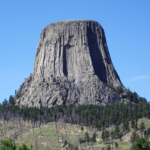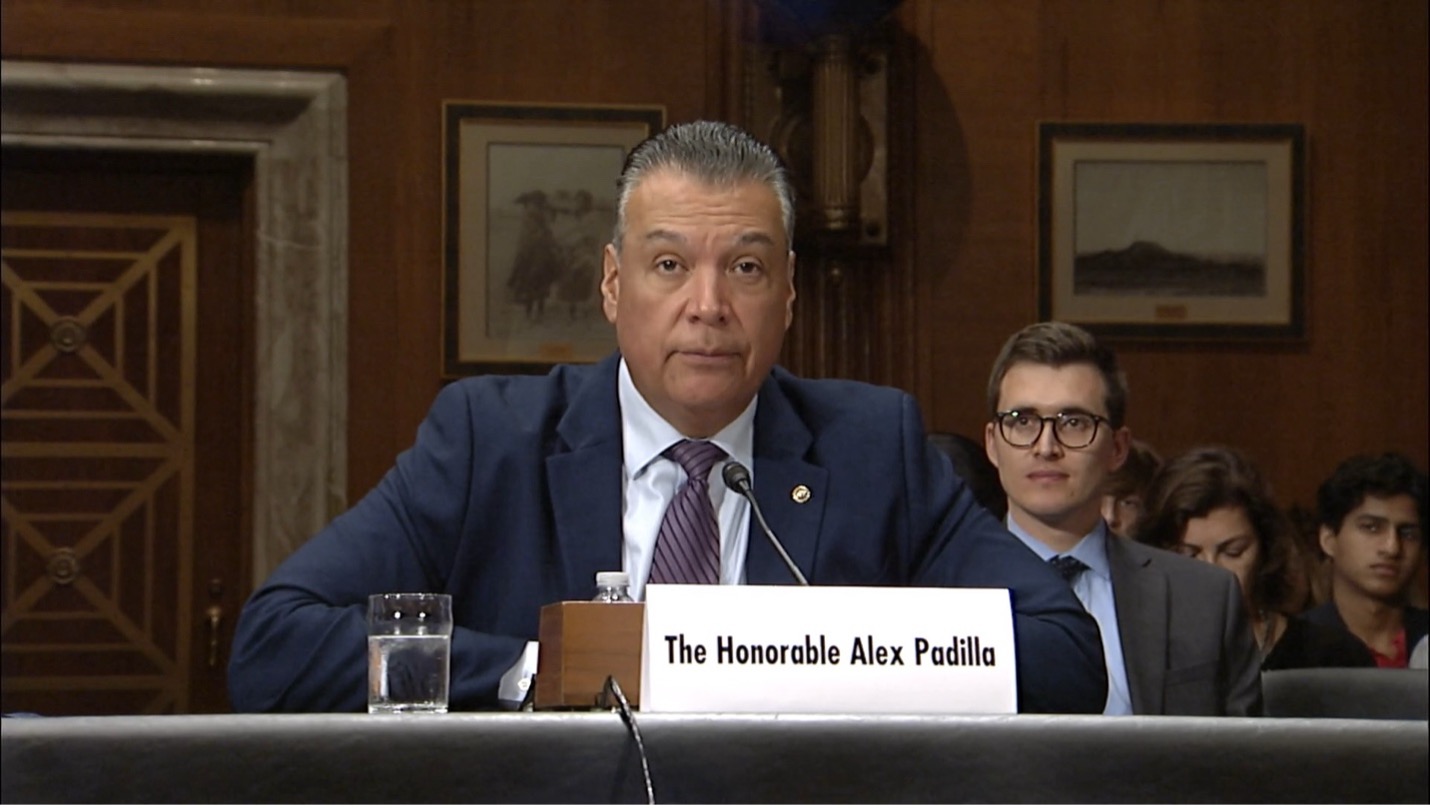

The Senate Indian Affairs Committee has advanced legislation returning 557 acres to tribal trust. The acreage is modest. Its history is not.
On a map of California, 557 acres is not an enormous amount of land.
For the Pit River Tribe, the Four Corners property in Shasta County carries a history measured very differently.
The Senate Committee on Indian Affairs considered and advanced the Pit River Land Transfer Act on 5 August. The legislation would transfer approximately 557 acres of federal land administered by the U.S. Forest Service to the Secretary of the Interior to be held in trust for the Pit River Tribe.
The Tribe consists of 11 autonomous bands whose ancestral territory extends through a large area of northeastern California.
Four Corners has cultural and historical meaning extending well beyond its acreage.
The struggle over the property did not begin with the present legislation.
In 1970, Pit River people occupied the Four Corners property as part of their effort to assert claims to ancestral land. The confrontation that followed with federal and local authorities became part of the Tribe’s modern history.
The Tribe has continued trying to acquire the property through governmental processes for more than a decade, according to the legislation’s Senate sponsors. Those efforts encountered repeated delays.
Federal legislation now offers a route around that administrative impasse.
Trust status carries a meaning considerably greater than a change in the name written beside a parcel on a federal map.
Land held in trust for a tribe becomes part of the territorial foundation upon which tribal governmental authority, cultural protection and long-term community planning can rest.
The congressional history of H.R. 2400 also makes clear that gaming is not the purpose of the transfer. The House Natural Resources Committee report accompanying the legislation expressly states that gaming under the Indian Gaming Regulatory Act would be prohibited on the land.
That distinction is useful because Native land-restoration legislation is too often reduced immediately to speculation about casinos.
Four Corners is instead a land-restoration story.
It is also an example of the peculiar difference between the speed at which Native land was historically removed from tribal control and the extraordinary amount of time sometimes required to restore even relatively small parcels.
The modern legislative effort concerns hundreds of acres.
The process has taken years.
The history behind it extends for generations.
The Senate committee’s action does not itself complete the transfer. Further legislative action remains necessary before the land can finally be placed into trust.
Yet the 5 August committee decision moves the measure another stage forward after decades in which Four Corners has remained outside the Tribe’s land base.
That gives the legislation a peculiar relationship with time.
For Congress, H.R. 2400 is a land-transfer bill progressing through the legislative process.
For the Pit River Tribe, it is another chapter in a dispute over a place whose meaning did not begin when Congress assigned the bill a number.
More than half a century after the confrontation at Four Corners, Washington is still deciding whether those 557 acres should formally return to tribal trust.
The land, meanwhile, has been there throughout.
Sources
Senate Committee Advances Bipartisan Padilla Bill to Support Tribal Land Management
6 August 2026
https://www.padilla.senate.gov/newsroom/press-releases/senate-committee-advances-bipartisan-padilla-bill-to-support-tribal-land-management/
Business Meeting to Consider S. 239, S. 1055, S. 1514, S. 3219 & H.R. 2400
5 August 2026
https://www.indian.senate.gov/hearings/business-meeting-to-consider-s-239-s-1055-s-1514-s-3219-h-r-2400/
H. Rept. 119-289 — Pit River Land Transfer Act of 2025
15 September 2025
https://www.govinfo.gov/app/details/CRPT-119hrpt289/CRPT-119hrpt289