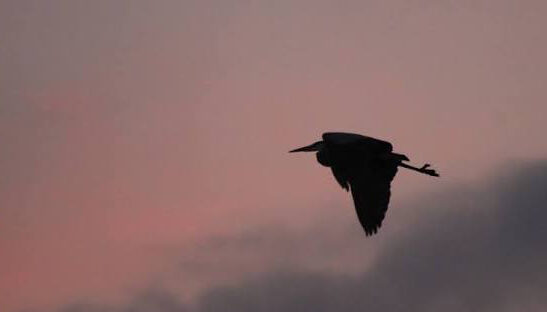

It would be fair to say that birders have somewhat of a publicity problem in the general populace. Granted, there are many, many people who are fascinated by birds and may learn quite a bit about birds, but, as with anything, one’s interest in birds can be taken to extremes. In the tourism industry, hardcore birders are known as twitchers.
There are various etymologies for the term. Perhaps it has to do with the constant vigilance one feels they must be on to ensure they don’t miss a sighting on their life list, or that someone who is so fanatical about anything might be prone to twitches and ticks here and there, or, heck, maybe since birds often have a twitching kind of way about them, birders ended up with the moniker as well. Who knows?
Off hand, if I were to give birders a label, I’d go with “buffers”, for a few different reasons. One, they want to make sure their optical equipment is in tip top shape and can constantly be seen cleaning and buffing their lenses of binoculars and cameras, huge telephoto lenses. Second, when in among birders, you want to ensure a buffer zone around you, because a birder in pursuit of a sighting on their life list is very libel to liberally encroach your buffer zone. Which leads to the final reason, a fanatical birder is very much like a buffalo, sedentary and calm for the most part, but when riled by the prospect of a rare species, all hell breaks loose and I am seriously not kidding when I say it is possible to get gored by someone who paid thousands and thousands of dollars to the chance split second view of some tiny flier in the farthest reaches of our planet. I’ve heard amazing stories from guides who speak of grave injury and near-death experiences in pursuit of such.
One of my favorite birding stories was about a birding charter the Spirit of Oceanus was on to Attu Island, the furthest in the Aleutian Chain and closest to Russia. By nature, to be a good Exploration or Expedition Leader, you are interested in a wide variety of things natural, historical and anthropological. Granted, you may have a particular interest or expertise based on your studies or fascination, and while you may be called to give lectures or provide narration on those subjects when appropriate, it is almost guaranteed that you will be asked to speak on every possible topic that may be encountered on your itineraries. And, of course, when working with others who are experts in different things, you invariably pick up knowledge and share facts and ideas, even sharing presentations slide shows. The other proclivity you share is the pure joy of sharing all of that information with interested guests.
And so, on this charter to Attu for a boat load, literally, of birders, the Exploration Leaders were excited to give quite a few lectures on all things avian, especially those particular to the region, with a heavy emphasis on species of marine environs. My friend and boss Alastaire went to give the first lecture and found very few of the guests actually there. The staff merely assumed it was jet lag, or something similar, and that further lectures would be more well attended. After all, the lectures pertained directly to the birds the guests were going to view. Surely, they would be interested in learning about habitat and diet and mating and nesting and climate concerns and such. But, then the next lecture happened and again, hardly anyone showed up. Alastaire spoke to some of the few guests who were in attendance only to find that they weren’t actually birders themselves, but the spouses of a birder. When asked why they thought their partners were not interested in coming to the lectures, one of the spouses chuckled and said, “Oh, they don’t give a wit about anything to do with the bird other than whether or not they see it, so they can mark it off of their life list.”
Upon further inquiry, even with birders themselves, even with the organizers of the charter, a very well-known birding company, there was zero interest in anything other than sightings and life lists. (If you don’t know, a life list is a list of every known bird species on the planet, and, as you go through your life, the goal is to tick off as many of those species as possible, most especially the rare species, so that you can brag about your list to others, presumably the “others” being others who are actually interested in your life list, which is usually other birders, and, even then, they are only interested in your list in comparison to their own list, thus, leading to very intense competition and ardent fanaticism.)
Now, it was rather rare to have such a birder on any of the cruises I worked on, mostly because we wouldn’t spend enough time in a place like Unalaska, which is near the home of the famous Whiskered Auklet (which is not on my life list) (yet), or the Pribilof Islands, upon which can often be found errant species, usually of the Asiatic kind, blown far from home by big North Pacific storms. We were lucky if we got four hours in such places, and that was assuming we could land at all, which, in the erratic Bering Sea, was never a given. Birders wanting to explore such a place would instead fly there and plan to spend considerable time there, able to walk and cover as much ground as possible in search of their quarry, or, in the case of the Whiskered Auklet, able to afford hiring a boat to take you 20 or so miles from the town of Unalaska to the Baby Islands, one of the few nesting ground of the tiny species. In fact, the only destination we had that actually attracted actual birders at all was St Matthew’s Island, one of the most remote places in the world, in the middle of the Bering Sea, whose only inhabitants ever were a few soldiers posted as lookouts during World War II, considered the worst possible non-combat assignment ever. St Matthew’s Island is home to the extremely rare McKay’s Bunting, a cousin to the more abundant Snow Bunting. You came on a cruise like ours because there was no other feasible way to get there and even that was not guaranteed. During the eight voyages I was with on that particular itinerary, we could only safely land twice, of which one landing was cut short for safety reasons and, honestly, we barely got everyone back onboard before conditions totally deteriorated. But for some birders, it was worth the chance, and for one or two on my watch, it was worth it. They could check McKay’s Bunting on their life list.
You might be determining from my tone thus far, I would not count myself among the ranks of the world’s birders, twitchers, buffers. While I have a deep interest in quite a few things, I doubt there is one in which I am actually fanatical about, and, indeed, I view any kind of fanaticism with caution. But, if you are going to work on a cruise ship which ventures into far off waters, home to many different species of animals, you want to be somewhat knowledgeable about them, including birds.
During my first season, one of my fellow Exploration Leaders, Russ, was ornithologically inclined, harboring a great deal of knowledge, and getting terribly excited about certain sightings. He even had a life list, but it was OK. Like any other groups of people one might discriminate against, it was different with Russ because he wasn’t like the “others”. He was a birder, but he was our birder. We could now say, “Oh, I’m not prejudiced against birders, one of my good friends is a birder.” Given that birds were not my forte, I was constantly asking him questions and he shared a great deal of knowledge with me. Soon, I was learning about species I had never heard of, despite the fact that some of them existed in Alaska in truly staggering numbers. And, of course, every time anything about birds came up, especially regarding identification, out came the fabled book, Sibley’s Guide to Birds of Western North America. I was fascinated by the book, how Sibley realized that photography was imperfect in capturing each bird in a way that would make identification certain, so he started to paint them, following a tradition from the time before photography, and before long, hundreds and hundreds of paintings were done and, along with various facts about range and habitat, nesting practices and description of calls, the Sibley guide was born. It was most definitely the book that every single birder needed, which, at the same time, meant it was a book I did not want to own myself. Oh, certainly I was fine with going to the on-board library and perusing the copy there in order to find out what I needed or asking to look at the copies owned by my fellow workmates, but the thought of actually going into a bookstore and purchasing a copy of my very own was out of the question. I knew I would never have a true need for my own copy. For a while, this notion worked. I was even getting good enough at identifying birds without retreating to the guide for assistance, at least, regarding the species we most often encountered on our journeys.
Try as I did though, a few years into my time at Cruise West, one fateful fall day, I found myself at a big box bookstore, meandering my way to the natural history section, and then casually searching for the bird section, and then making my way past all of the other “inferior” guides, until my gaze fell upon the spine of my horrible, shameful destiny: The Sibley Guide to Birds of Western North America. I took in a deep breath. Not even needing to flip through it in order to decide if this would be the particular book I wanted, I knew exactly. The deep breath in resulted in a weary sigh out. I looked both way and, seeing no one, plucked the book from the shelve and made my way directly to the queue for check out. People in line were casually chatting about this or that around me and I honestly wondered if anyone caught sight of the book in my grip, wondered, if they did, would they then look at their family member or friend and make some hushed comment, like, “Hey, if you ever wanted to see what a crazy birder looks like, turn around.”
Of course, there will be many who will probably read this passage and remain convinced that I am exaggerating my consternation over this event for comedic value or dramatic reasons, but I would like to assure you that this is not the case.
When I got home, I sat on my sofa and looked at my purchase, shaking my head and silently saying to myself, “Well, s**t, you’re officially a f**king birder now.” And yet, while most people speak of their guilty pleasures, I saw birding now as a pleasurable guilt. I genuinely did not want to be a birder, and fought every urge to actually begin a life list, but despite my self-loathing I was also very, very joyous to now own my own copy of such a abominable tome to natural wonder. I flipped through it and cringed gleefully at every species that I recognized, sloppily tallying the number of species I had sighted, peering closer in wonder at this feature or that of plumage or coloration, making a secret list of species that ranged along the coast of Alaska and British Columbia that I hadn’t yet seen and hoped that I would. But not a life list! At all cost, not a life list! I did this only for the happiness of being able to share my knowledge of birds and all other wildlife with eager guests from around the globe, to glow in their praise for being able to help them understand the specifics of the wonder that surrounded them.
And so, it worked. I grew to know many species, their range, and many other facts, impressing guests right and left, but still comfortable in the assurance that I wasn’t actually a birder
Until, that is, the fateful day.
We were in the southern end of the Queen Charlotte Sound in British Columbia. It was not a very spectacular day, to say the least, with a horizon to horizon dollop of grey clouds flattening everything out, eating up all sense of color from the landscape, giving the flat, calm waters an oily dimness. Of course, in its own way on that day, it was still beautiful, for it was hard to find anything along our entire route in the north that wasn’t beautiful in some way, even on a bad or marginal weather day, for even in rain, the wisps of clouds seducing the ridges and forests were stunning in their own way. But this day simply lacked depth, as though we were all traveling through a two-dimensional photograph. It was in this light that we launched the zodiacs to have a look around. Perhaps we would spot some sea mammals of some sort, seals, otters, or, if we were lucky, some dolphins, porpoise, or even orcas or whales. It was worth a shot anyway, and if not, the forest of the area was always interesting, and, besides, our job as guides was to find any situation interesting enough to narrate our way through a 45-minute tour, resorting to fascinating stories about lichens or banana slugs, if need be, and only in the direst of commentary situations. While it may have been a two-dimensional landscape, it was pretty up close, with lush meadows of moss and stunted Douglas firs grappling with acidic muskeg soils, and lovely little coves and passageways that lent a coziness to one of the vastest tracts of unspoiled temperate rainforest on the entire planet. If the guests weren’t excited by their surroundings, they were at least calmed and smitten with it.
It was during our slow sojourn around these quaint islands that a guest asked out of nowhere, “Oh, what’s that bird there?” It wasn’t an urgent question. Just a curious inquiry, to which I swiveled my head to catch a glimpse of this mystery flyer. My eyes were immediately drawn to the gliding silhouette and, after a glance, I turned back around and said, off handedly, for I’d been in the middle of another sentence, “That’s a great blue heron.”
Well, it did not matter at all what sentence I had been in the middle of just before, because I stopped and slumped slightly. The guests could see that I was deflated by something.
“Are you OK, Jack?”
I looked up guiltily.
“Yeah,” I said. “It’s just that I was able to identify a great blue heron merely by its silhouette in flight on a flat light day, and that can mean only one thing.”
The guests were confused at that point and gave me tentative worried looks, What?
“It means … I’m a birder.”
I sighed heavily, and to my comfort, I heard a few guests cringe subtly and whisper knowingly, “Ooh.”