
The Umatilla Tribes are moving closer to regaining civil jurisdiction more than 70 years after Congress expanded Oregon’s authority on their reservation.
It took Congress one law to change who had jurisdiction on the Umatilla Indian Reservation.
That was in 1953.
They are still undoing it.
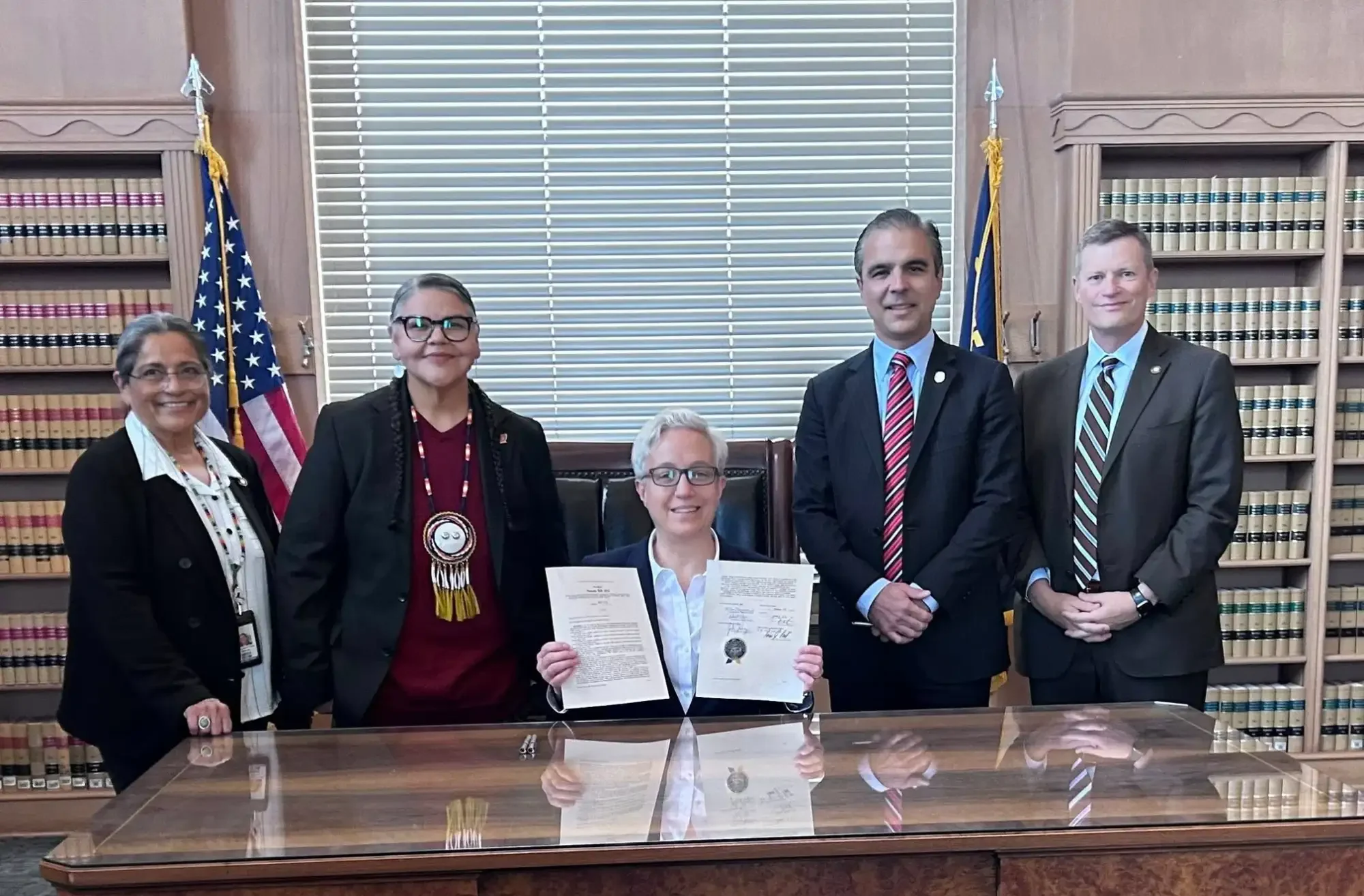
Oregon Governor Tina Kotek has signed a proclamation supporting the Confederated Tribes of the Umatilla Indian Reservation’s request to regain sole civil jurisdiction on their reservation.
The request now goes to the U.S. Department of the Interior for federal review.
If approved, civil legal authority that Oregon has exercised for decades would return to CTUIR.
That sounds like lawyers moving words between governments.
It is considerably more ordinary than that.
Civil jurisdiction reaches into the places where people actually live their lives: property, contracts, private disputes and other legal matters that arise between people and institutions.
And underneath all of them is a much simpler question.
Whose law applies here?
For the Umatilla Tribes, the answer has been complicated for more than 70 years.
In 1953, Congress enacted Public Law 280, transferring significant criminal and civil jurisdiction in Indian Country to several states, including Oregon.
The law came during the federal Termination Era, when the United States was pursuing policies intended to weaken or end its political relationship with tribal nations and move Native people and governments under state authority.
Public Law 280 did not make tribal governments disappear.
It did make the legal map considerably messier.
Federal law.
State law.
Tribal law.
Sometimes county government.
Sometimes several of them at once.
For Native nations trying to build their own justice systems, the question was not merely which court handled a case.
It was whether their own government possessed the authority to govern their own people on their own land.
For CTUIR, part of that authority began coming back decades ago.
Oregon returned, or retroceded, criminal jurisdiction over the Umatilla Indian Reservation in the early 1980s.
Civil jurisdiction remained with the state.
So sovereignty came back in pieces.
The current request would return another one.
There is an older document behind all of this.
The Treaty of 1855 created the Umatilla Indian Reservation after the Cayuse, Umatilla and Walla Walla peoples ceded millions of acres to the United States.
But treaties are worth reading carefully.
The Tribes did not receive from the United States the right to fish, hunt, gather foods and medicines or pasture livestock.
They reserved those rights when they ceded the rest of the land.
That difference between given and kept has occupied federal Indian law for a very long time.
And it helps explain why jurisdiction is more than administrative housekeeping.
Tribal governmental authority did not begin when Oregon decided to recognise it.
The question is how much of that authority other governments have allowed themselves to exercise instead.
CTUIR submitted its civil-jurisdiction request in November 2025 using a newer Oregon process for returning state jurisdiction, according to reporting by Underscore Native News and ICT.
Governor Kotek’s proclamation accepts that request at the state level and directs Oregon to petition the Department of the Interior.
CTUIR Board of Trustees Chair N. Kathryn Brigham has noted that the Tribes have exercised criminal jurisdiction since its return in the early 1980s.
Civil jurisdiction would complete another part of that work.
It would not erase Public Law 280.
It would not erase the Termination Era.
And it certainly would not simplify more than a century of federal Indian law overnight.
But power can move in two directions.
For much of American history, federal Indian policy moved authority away from Native nations.
Sometimes Congress took it.
Sometimes states received it.
Sometimes federal agencies exercised it.
The result was a legal system in which Native nations often found themselves proving their authority on land where their governments existed long before Oregon or the United States did.
Retrocession reverses that direction.
Not symbolically.
Practically.
Courts.
Law.
Families.
Property.
Disputes.
Responsibility.
The Department of the Interior still must accept the request, so the transfer is not complete.
But Oregon has now said yes.
More than 70 years after the federal government helped move civil authority away from tribal hands, the Umatilla Tribes are another step closer to taking it back.
It took one Act of Congress to help create the problem.
Undoing it has taken generations.
Sources
Confederated Tribes of the Umatilla Indian Reservation — Gov. Kotek Signs Proclamation Returning Civil Legal Jurisdiction to CTUIR: https://ctuir.org/news/gov-kotek-signs-proclamation-returning-civil-legal-jurisdiction-to-ctuir/
Oregon Governor’s Office — Governor Kotek Signs Proclamation Returning Civil Legal Jurisdiction to the Confederated Tribes of the Umatilla Indian Reservation: https://apps.oregon.gov/oregon-newsroom/OR/GOV/Posts/Post/governor-kotek-signs-proclamation-returning-civil-legal-jurisdiction-to-the-confederated-tribes-of-the-umatilla-indian-reservation
Confederated Tribes of the Umatilla Indian Reservation — Brief History of CTUIR: https://ctuir.org/about/brief-history-of-ctuir/
Underscore Native News — Oregon Governor Signs Proclamation to Return Civil Legal Jurisdiction to Umatilla Tribes: https://www.underscore.news/justice/oregon-governor-signs-proclamation-to-return-civil-legal-jurisdiction-to-umatilla-tribes/
ICT — Oregon Governor Returns Civil Legal Jurisdiction to Confederated Tribes of the Umatilla Indian Reservation: https://ictnews.org/news/oregon-governor-returns-civil-legal-jurisdiction-to-confederated-tribes-of-the-umatilla-indian-reservation/