
Kawerak says new federal chum bycatch measures still leave Western Alaska communities carrying too much of the conservation burden.
A salmon caught by mistake is still gone.
It does not reach the river.
It does not spawn.
It does not become strips hanging in a smokehouse.
It does not become dinner.
That distinction sits at the heart of Kawerak’s criticism of new federal measures intended to reduce chum salmon bycatch in the Bering Sea pollock fishery.
The North Pacific Fishery Management Council has approved a new Western Alaska chum salmon bycatch limit tied to a closure area in the Eastern Bering Sea pollock fishery, along with changes intended to improve the fleet’s salmon-avoidance practices.
Kawerak says it is not enough.
The regional nonprofit, which serves tribes throughout the Bering Strait region, had joined tribal governments, rural residents and other salmon-dependent communities calling for considerably stronger restrictions.
According to Kawerak, chum salmon bycatch in the Eastern Bering Sea pollock fishery has averaged about 250,000 fish a year since 2011.
Within the proposed conservation corridor alone, Kawerak says annual chum bycatch has averaged about 164,000 fish, including Western Alaska chum, Gulf of Alaska chum and Asian hatchery chum.
Those are fisheries-management numbers.
In Western Alaska, they become something else.
A fish that does not reach the Yukon, Kuskokwim or another Western Alaska river is not only missing from a population estimate.
It is missing from somebody’s net.
For generations, Alaska Native families have built seasonal lives around salmon.
Catching them.
Cutting them.
Drying them.
Smoking them.
Sharing them.
Teaching children what to do with them.
A child learning to cut fish is learning considerably more than food preparation.
They are learning where food comes from, who receives it, what gets wasted, what does not, and what responsibilities come with taking another life for your own.
Salmon are biology.
They are also food, trade, memory, teaching and relationship.
Which is why a federal fishery meeting hundreds of miles away can eventually reach all the way into a village freezer.
Western Alaska salmon runs have collapsed badly enough that subsistence families have endured closures and severe restrictions intended to protect returning fish.
People who have depended on those rivers for generations have been told, sometimes year after year:
Do not fish.
Meanwhile, salmon continue to die offshore as bycatch in one of the largest commercial fisheries in the world.
That does not mean pollock fishermen are deliberately targeting salmon.
They are not.
That is what bycatch means.
But accidental describes how the fish was caught.
It does not change what happens to the fish afterward.
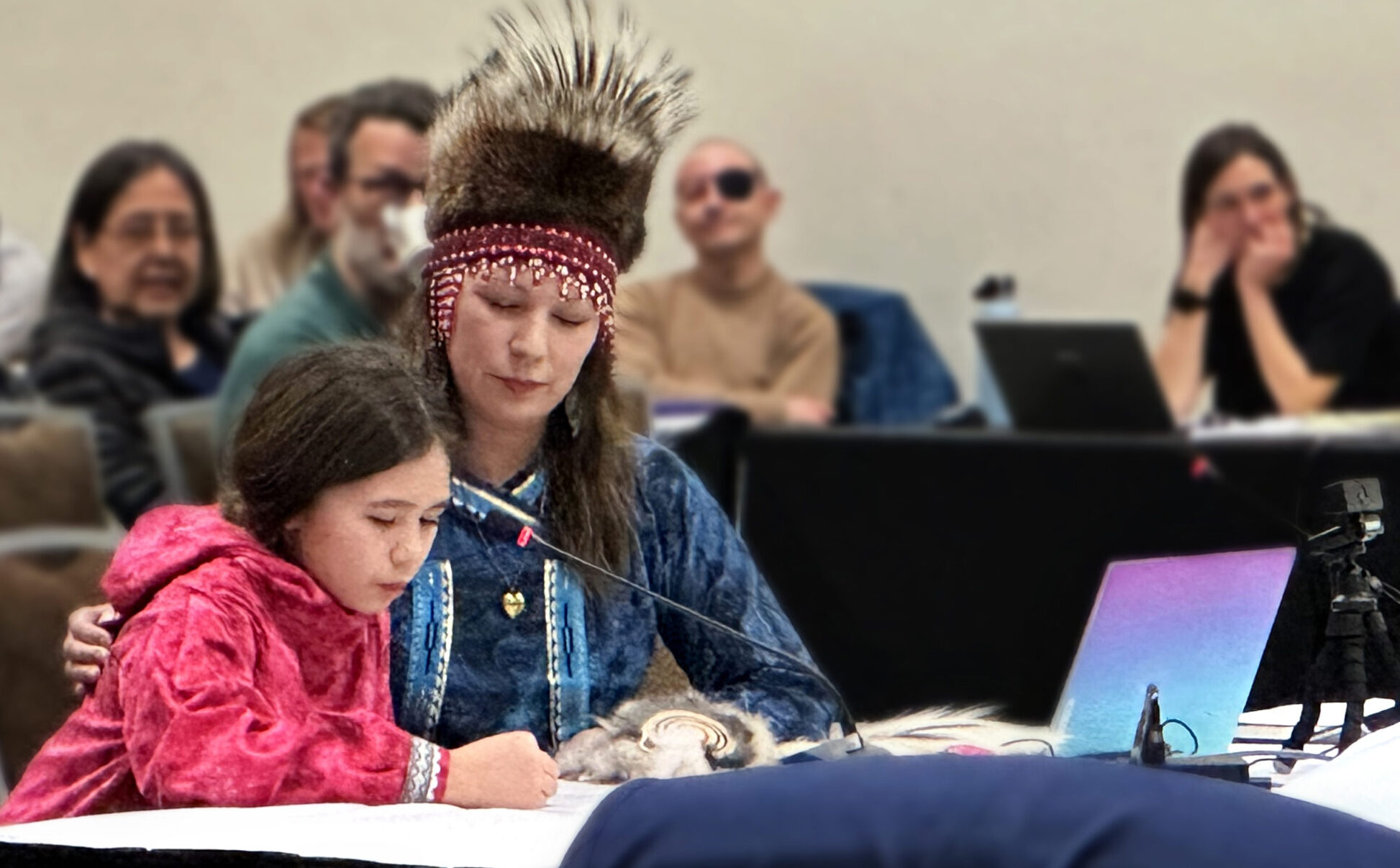
Kawerak says nearly 200 people testified during the Council process, with rural Alaska residents, tribal representatives, fish commissions and tribal regional nonprofits making up most of those who spoke.
The organisation supported a 100,000-fish chum salmon bycatch cap across the pollock fishery, a 50,000-fish cap within the conservation corridor, and stronger regulation of industry salmon-avoidance measures.
The Council chose a narrower approach.
Its February 2026 action created a bycatch limit focused specifically on Western Alaska-origin chum salmon and linked that limit to a closure area in the Bering Sea pollock fishery. The Council says the measure is designed to change fleet behaviour and reduce interceptions of Western Alaska chum during their migration.
Kawerak’s objection is not that the Council did nothing.
It is that the Council did less than communities asked.
The organisation says the measure does not establish the broad hard cap it sought across the entire pollock fishery, does not fully address chum bycatch outside the corridor and could still allow substantial numbers of salmon to be caught before stronger consequences take effect.
That disagreement exposes a larger question about conservation.
Who carries it?
When salmon runs collapse, rural subsistence fishermen can lose access to the fish almost completely.
The commercial pollock fleet continues fishing under rules intended to reduce its interception of salmon.
Those two forms of restriction are not the same.
Neither are their consequences.
For a pollock vessel, avoiding salmon is a regulatory requirement inside a commercial operation.
For a family on the river, a salmon closure can mean losing food that has been harvested, prepared and shared across generations.
The difference is not an argument that commercial fishing should disappear.
It is an argument about how conservation costs are divided.
Alaska Native communities have spent decades fighting to have subsistence treated as something more than one competing allocation among many.
Federal and state management systems tend to speak through numbers:
Runs.
Escapement.
Allocations.
Caps.
Economic value.
Bycatch.
Native communities often begin somewhere else.
The river.
The smokehouse.
The freezer.
The elder who remembers when the fish came back differently.
Every number has a counter.
Every counter has a reason.
NOAA’s environmental review considered alternatives for reducing chum salmon bycatch in the Bering Sea pollock fishery, and the Council’s action now continues through the federal rulemaking process.
So the final rules are not yet the end of this story.
Neither is Kawerak’s criticism.
The deeper disagreement remains.
Western Alaska communities have already been asked to sacrifice in the name of salmon conservation.
They are asking why more of that sacrifice cannot occur offshore.
Because a salmon caught accidentally is still a salmon that will never reach home.
Families cannot eat accidents.
And the future of the run can’t be.
Sources
Kawerak — Tribal Voices Call for Meaningful Action on Chum Bycatch: https://kawerak.org/press-release-kawerak-region-tribal-voices-call-for-meaningful-action-on-chum-bycatch/
North Pacific Fishery Management Council — Western Alaska Chum Salmon Bycatch Limit: https://www.npfmc.org/notice-of-council-action-western-alaska-chum-salmon-bycatch-limit/
NOAA Fisheries — Bering Sea Chum Salmon Bycatch Management Draft Environmental Impact Statement: https://www.fisheries.noaa.gov/resource/document/draft-environmental-impact-statement-and-regulatory-impact-review-proposed