Read this article: Lakota • Inupiaq • English
LAKOTA
Pe’ Sla, Alaska graphite, na America wówaši thóka kiŋ mahél wówiyuŋǧe eháŋni kiŋ
Aŋpétu September 1, 2026 iyéčhel wóyakapi
Makȟóčhe awáŋyaŋka uŋkíčhiyapi kte čha, táku uŋyúha kte kiŋ wówapi thóka waŋ lé.
Lithium. Copper. Cobalt. Graphite.
Energy economy eháŋni kiŋ carbon makȟá él k’ápi na pȟéta íyeyapi.
Waná energy economy thóka kiŋ táku tȟókeča makȟá él k’ápi, carbon kitáŋla pȟéta íyeyapi kte šni čha.
Oȟlóka kiŋ, eyáš, oȟlóka héčha.
Hetáŋhaŋ graphite táku núŋpa iyéčheča šni kiŋ Pe’ Sla él áya. Pe’ Sla kiŋ Pahá Sápa él makȟóčhe pȟá waŋ, Lakȟóta na Očhéthi Šakówiŋ oyáte tȟáwa wakȟáŋ.
Februári 27 aŋpétu, U.S. Forest Service kiŋ Pete Lien & Sons tȟawówaši, Rochford Mineral Exploratory Drilling Project, Pe’ Sla iyóhiŋl federal makȟá él ečhúŋpi kte čha iyéčetu eyá. Graphite wóyuhaŋpi kte čha ohlóka owáŋka 18 káǧapi kte.
Forest Service kiŋ makȟóčhe na táku iyúha waŋyáŋkapi kte kiŋ átaya ečhúŋpi šni. “Categorical exclusion” ečíyapi kiŋ uŋ ečhúŋpi.
Heháŋl federal court él lawsuit núŋpa ópi.
NDN Collective, Black Hills Clean Water Alliance na Earthworks kiŋ waŋ ópi. Oyáte wókičuze šakówiŋ-sám aké núŋpa — tribal nations nine — kiŋ uŋmá ópi.
Hená Forest Service kiŋ makȟóčhe, wóčhekiye, wóuŋspe eháŋni na Lakȟóta wicóȟ’aŋ táku ečhúŋpi kta he, čhaŋté waŋyáŋkapi šni eyápi.
Heháŋl ohlóka wówaši táku hí.
Oyáte kiná hípi.
Makȟá awáŋyaŋkapi kiŋ ohlóka owáŋka él wóčhekiye ečhúŋpi. Wówaši táku iyáyapi kte kiŋ okíhipi šni čha hená awáŋkiyapi.
Oyáte wókičuze, Indigenous organizations na makȟóčhe awáŋyaŋka organizations federal court él ópi.
May 4 aŋpétu, federal judge waŋ temporary restraining order waŋ káǧe. Aŋpétu 14 ohlóka wówaši ečhúŋpi kte šni eyá, lawsuit kiŋ iyáyapi čháŋna.
Aŋpétu núŋpa-sám aké núŋpa — four days — iyáye čháŋna, Pete Lien & Sons kiŋ tȟawówaši owápi iyúha iyúšpa. Forest Service héčhiya akhé wówaši owápi waŋ káǧe kte šni eyá.
Okó waŋží.
Okó waŋží mahél oyáte iyúha iyúštaŋyaŋ waŋnážiŋpi.
Indian Country él makȟá ožáža wówaši kiŋ wíčhaša tȟokáheya ečhúŋpi kiŋ t’ápi kta iyáya s’a.
Čha lé — okó waŋží — líla oháŋkoya héčha.
Pe’ Sla táku waŋží lé čha awáŋyaŋkapi šni.
Wóčhekiye héčha.
Lawsuit héčha.
Wíčhaša na winyáŋ ohlóka owáŋka él yaŋkápi.
Oyáte wókičuze, makȟóčhe awáŋyaŋka organizations na Indigenous organizers ómakhiya ečhúŋpi.
Heháŋl ohlóka wówaši waníl.
Graphite wačhíŋpi šni ečé šni.
Hiyá.
Tȟókeča líla.
Natural graphite kiŋ lithium-ion battery, energy storage, steel káǧapi, na wówaši tȟókeča iyúha uŋ líla wašté.
U.S. Geological Survey ečíyapi kiŋ, United States natural graphite iyúha tȟokátaŋhaŋ yuhá — 100 percent net import reliant.
Čha graphite United States mahél k’úpi kte kiŋ energy policy, industrial policy na national security wówiyuŋǧe héčha.
Hečháŋna 2,700 miles okȟákičhiye waŋží, tȟokáta kiŋyáŋk.
Alaska.
Graphite One Inc. kiŋ Graphite Creek Project tȟáŋka waŋ Seward Peninsula él káǧe kte wačhíŋ.
Nome tȟáwa north 37 miles okȟákičhiye, Teller na Brevig Mission tȟáwa northwest 28 miles okȟákičhiye.
Graphite One (Alaska) Inc. kiŋ Alaska él tȟawówaši káǧe; čhaŋwáŋka waníyetu iyúha wówaši, makȟá pahá mahél yawágluza — open-pit mine — na graphite waštéya káǧapi kte.
Alaska Department of Natural Resources kiŋ Graphite Creek, United States mahél large-flake graphite slolyápi kiŋ, iyótaŋ tȟáŋka na iyótaŋ wašté eyá.
Lé okó waŋží él iyúštaŋpi šni.
Eyáš iháŋblaya iyáye.
July él U.S. Army Corps of Engineers kiŋ Graphite Creek táku tȟáŋka makȟóčhe na oyáte héčhiya ečhúŋ kte slolyápi čha, Environmental Assessment ečé šni, Environmental Impact Statement átaya káǧapi kte eyá.
Hé iyéčhel Alaska State Historic Preservation Office kiŋ cultural resources owápi federal determinations tópa iyéčetu eyá, eyáš aké šakówiŋ-sám aké tópa — fourteen — iyéčetu eyá šni. Akhé átaya waŋyáŋkapi na oyáte kiná wóglakapi kte eyá.
Federal permit wówaši waná 2027 mahél iyáya kte.
Graphite One kiŋ Environmental Impact Statement átaya káǧapi kte kiŋ wašté eyá. Naháŋ 2029 él graphite káǧapi tȟokáheya iyáyapi kte wačhíŋpi.
Company kiŋ Graphite Creek wówaši k’ú kte, makȟóčhe wówaši na money k’ú kte, na United States graphite tȟokátaŋhaŋ iyúha yuhá kiŋ waná tȟamákȟočhe él yuhá kte eyá.
Alaska Native corporations etáŋ hé iyéčhel ečhíŋpi.
Bering Straits Native Corporation — hé makȟóčhe kiŋ regional Alaska Native corporation — 2023 él Graphite One héčhiya $2 million k’ú.
Tȟawówaši itȟáŋčhaŋpi iyúha Graphite Creek káǧapi kte iyéčetu eyápi.
Doyon, Limited na Aleut kiŋ heháŋl $5 million ómakhiya k’úpi.
BSNC kiŋ tȟamákȟa na village-corporation makȟá él mine site yaŋké šni eyáš, money k’úpi kiŋ wóglaka owáŋka él yaŋkáp ečhél káǧe eyá. Shareholders wówaši yuhápi kte na táku wašté tȟokáta yuȟ’áŋpi kte eyá.
Eyáš Alaska Native oyáte mine iyóhiŋl thípi kiŋ etáŋ tȟókeča waŋyáŋkapi.
November 2025 él Native Village of Brevig Mission, City of Brevig Mission na Brevig Mission Native Corporation kiŋ waŋžíyela Graphite Creek háŋ ečhíŋpi šni.
Subsistence wóyute, wicóȟ’aŋ, oyáte wíčozani na makȟóčhe tȟokáta wašté yaŋké kte kiŋ šičáya ečhúŋpi kte šičá ečhíŋpi.
July 2026 él Brevig Mission thípi waŋ él oyáte 80 okȟákičhiye Graphite One na BSNC wíčhaša kiná wóglakapi.
Oyáte ohómni iyúha háŋ ečhíŋpi šni.
Mní.
Hoǧáŋ.
Tȟatȟáŋka šúŋ? — caribou.
Waskúyeča — berries.
Mní tȟáwa makȟá él uŋnážiŋpi — marine mammals.
Na Imuruk Basin, hé oyáte tȟáwa wóyute na wóuŋspe iyúha uŋ yaŋkáp ečhél.
Native Village of Brevig Mission tribal office coordinator Darla Tocktoo kiŋ waȟtéya eyá:
“Uŋnípi kte čha lé uŋnážiŋpi.”
We are stopping you for our survival.
Teller oyáte kiŋ tȟókeča wóglakapi. Etáŋ wówaši wačhíŋpi. Etáŋ Teller, Mary’s Igloo na Brevig Mission wóyute-khúwa makȟá eháŋni uŋpi kiŋ waŋží akhé iyúhaš’ič’iyapi kte iníhaŋpi.
Lé wówiyuŋǧe kiŋ “Native people versus mining company” ečíyapi kiŋ ečé kiŋ tȟáŋka iyáye.
Alaska él investors etáŋ Alaska Native héčhapi čha.
Na lé 1971 héčhiya uŋkúŋpa.
Alaska Native oyáte eháŋni aboriginal land claims slolyápi na waštéya waŋyáŋkapi kte čha waúŋspepi.
Heháŋl 1968 él Prudhoe Bay oil iyéyapi.
Hečháŋna makȟá wóuŋspe oháŋkoya iyáye — Alaska state, federal government na oil industry kiŋ iyúha hé wačhíŋpi čha.
Native title waŋnážiŋ na federal land freeze kiŋ North Slope oil wówaši na Trans-Alaska Pipeline čhaŋkú él waŋnážiŋ.
1971 él Congress kiŋ Alaska Native Claims Settlement Act — ANCSA — káǧe.
ANCSA kiŋ aboriginal title waŋnážiŋ iyúštaŋ na hé iyéčhel Alaska Native oyáte héčhiya makȟá 44 million acres okȟákičhiye na $962.5 million k’ú.
Regional na village corporations Alaska Native shareholders tȟáwa káǧapi.
Pipeline waná káǧapi šni k’uŋ.
ANCSA kiŋ makȟá title wówiyuŋǧe tȟáŋka waŋ yušpáye. Congress kiŋ 1973 él Trans-Alaska Pipeline káǧapi kte čha tȟáŋčhaŋyaŋ iyéčetu eyá. Heháŋl wówaši iyáye.
Waníyetu 55 óhakab, hé wóuŋspe na compromise k’uŋ táku tȟókeča waŋ waná graphite makȟá itómu yaŋké.
ANCSA corporations kiŋ Alaska Native institutions héčhapi.
Eyáš tribal governments héčhapi šni.
For-profit corporations héčhapi; shareholders tȟáwa wóuŋspe yuhápi. Na etáŋ Lakȟóta/Native wicóȟ’aŋ, wóuŋspe, school na oyáte wówaši kiná money k’úpi.
Tribal governments kiŋ tȟaóyate na tȟawíčhaša héčhiya wóuŋspe tȟókeča yuhápi.
Tókȟa oyákihi čháŋna táku wačhíŋpi kiŋ iyéčheča.
Tókȟa iyéčheča šni.
Graphite One kiŋ Alaska Native corporation shareholders šičáya ečhúŋpi eyá šni.
Na Brevig Mission oyáte háŋ ečhíŋpi šni kiŋ mine hé čha makȟóčhe šičáya ečhúŋ kte ečíyapi šni.
Environmental review waná iyáya kiŋ hé čha wówiyuŋǧe oyákihi naháŋ nallu héčha.
Eyáš wóglaka kiŋ táku waŋ uŋnážiŋpi ečhél waŋyáŋkapi.
America oil wačhíŋ.
Heháŋl Native makȟá wóuŋspe iyúštaŋpi kte kiŋ oháŋkoya iyáye.
Waná America graphite wačhíŋ.
Akhé táku wašté makȟá mahél yuhápi kiŋ Indigenous oyáte thípi iyóhiŋl yaŋké.
Na akhé America oyáte táku wačhíŋ čha, oyáte hená wówiyuŋǧe waŋ wawíyuŋǧapi:
Tókȟa wóokihi na iníhaŋpi kiŋ uŋ yuhápi kte?
Pe’ Sla kiŋ waáyupta waŋ k’ú.
Oyáte kiŋ:
Hiyá.
Makȟá él yaŋkápi.
Federal court él ópi.
Ohlóka wówaši uŋnážiŋpi.
Alaska waná waáyupta šni.
Clean-energy transition lé, extractive economy eháŋni k’uŋ tȟókeča tȟáŋka héčha oyákihi.
Eyáš táku makȟá él k’ápi kiŋ tȟókeča káǧapi kiŋ waštéȟča.
Tuwá tȟamakȟá k’ápi kte he, tókhel uŋkíčuzapi kiŋ hé oȟ’áŋ tȟéča.
Táku makȟá él k’ápi kte wačhíŋpi kiŋ tȟókeča.
Wówiyuŋǧe kiŋ tȟókeča šni.
INUPIAQ
Pe’ Sla, Alaska-mi graphite, aasii Tannapta Nunaata energy economy-ŋata ataani apiqsruun utuqqaq
September 1, 2026
Paŋmapak nuna annautiniarlugu suut atuġaksrat uqautigiyauvich, allattorsimaffik nutaaq piqaqtuq.
Lithium. Copper. Cobalt. Graphite.
Energy economy utuqqaq carbon-mik nunamiñ paksraġaqtuq, aasii ikitḷugu.
Energy economy nutaaq atlanik nunamiñ paksraqtuq, carbon ikitqiyaġniarlugu.
Kisiani putu chuli putuuruq.
Ukiumi uvani graphite taamna apiqsruun Pe’ Sla-mun tikiutippaa. Pe’ Sla Pahá Sápa-mi — Black Hills-mi — nuna qutsiktuq ammaġnaq, Lakȟota-nun aasii Očhéthi Šakówiŋ-mi oyáte-nun kamagiyauqtuq.
February 27-mi U.S. Forest Service-ŋup Pete Lien & Sons-ŋata Rochford Mineral Exploratory Drilling Project-ŋanut “ii” uqaqtuq. Federal nunami Pe’ Sla qanittuani graphite-nik paqitchiġiaq 18-nik exploratory drill site-nik puturiniat.
Forest Service full environmental review savagani, categorical exclusion aturuaq.
Aasii lawsuit malġuk tikiutirut.
Atausiq NDN Collective, Black Hills Clean Water Alliance aamma Earthworks-kunniñ. Aipaa nine tribal nations-kunniñ.
Uqavaaqtut Forest Service-ŋup nunamun, ukpiġisanun, itsaqtuani pisimayunun, aasii ilitqusiġnun sunniutaksrat naammattumik qiviaŋitchai puturiñiq aallartitinnagu.
Aasii drill rigs tikiutirut.
Iñuichlu tikiutirut.
Land defenders ceremony-rtut active drill pad-ni, equipment-nun apqut matuġlugu. Tribal governments, Indigenous organizations aamma environmental groups federal court-mun aullaqtut.
May 4-mi federal judge temporary restraining order-mik tuniruq. Puturiñiq 14-nik uvlunik nutqaqtitkaa lawsuits suli suliarigaatni.
Sisamat uvlut qaangiummata, Pete Lien & Sons-ŋup plan of operations tamaat piiġaa. Forest Service-mun uqaqtuq project taavrumun plan-mik nutaamik qaitchiniaŋiññami.
Savaiññiġum akunniŋa atausiq.
Iñuich atautchikun paaqsaaqtut.
Indian Country-mi nunamik saqitsaassutit sivisuumik savaaqtuurut. Iñuk aallarniqsuq; savaaq chuli ittuq taamna iñuk tulliġmiḷḷuni.
Taamna savaiññiġum akunniŋa atausiq — qilamik. Qilamikpiaq.
Pe’ Sla ataasiqtuamiñ protected-ŋitchuq.
Ceremony piqaqtuq.
Lawsuits piqaqtut.
Iñuich drill pad-ni aquppiqtut.
Tribal governments, environmental groups, Indigenous organizers — atautchikun savaktut.
Aasii drilling project piitchuq.
Taamna graphite atuġnaqtuŋitḷugu uqautigiŋitchaa.
Akerlia.
Natural graphite lithium-ion battery-nun, energy storage-mun, steel-making-mun, aasii industrial uses atlanun atuġnaqtuq.
U.S. Geological Survey-ŋup uqautigaa Tannapta Nunaat natural graphite-mi 100 percent net import reliant-ruq.
Taamna piḷḷugu domestic graphite energy policy-mi, industrial policy-mi, national security-mi apiqsruutauliqsuq.
Taamnalu uvaptiknik 2,700 miles northwest-mun aullaġutivut.
Alaska-mun.
Graphite One Inc. Graphite Creek Project-mik savaaksraqaqtuq Seward Peninsula-mi. Project Pe’ Sla-miñ aŋitqiyauq.
Graphite Creek Sitŋasuaq-miñ — Nome-miñ — 37 miles north-mi ittuq, aasii Tala aamma Sitaisaq-miñ — Teller aamma Brevig Mission-miñ — 28 miles southeast-mi.
Graphite One (Alaska) Inc. year-round open-pit mine aamma processing operation sanaġniaġaa.
Alaska Department of Natural Resources-ŋup Graphite Creek Tannapta Nunaat-ni highest-grade and largest known large-flake graphite deposit-mik taiyaa.
Una savaiññiġum akunniŋani qasruŋitchuq.
Kisiani savaaq kigaallaktuq.
July-mi U.S. Army Corps of Engineers-ŋup Graphite Creek-mi reasonably foreseeable significant effects piqaqtuksraġigaa.
Taamna piḷḷugu Environmental Assessment kisimi atuġniġaaŋŋaan, full Environmental Impact Statement — EIS suliariniġaa.
Tavrumaniñ qanittumi Alaska State Historic Preservation Office federal government-ŋata cultural resources-nun eligibility determinations sisamat akuersigai. Kisiani 14-nik atlanik akuersinġitchuq; analysis aamma consultation iḷaġniġaat uqautigigaa.
Federal permitting paŋmapak 2027-mun sivisuraaqtuq.
Graphite One-ŋup uqautigaa EIS nakuuruq, suli 2029-mi production aallartisukkaa.
Company-ŋup uqautigaa Graphite Creek-mi savaaksrat, economic development, aasii Tannapta Nunaata graphite-mik tuniuġaqtuaniñ nakuutiksrat piqaqtut.
Alaska Native corporations iḷaŋich “ii” uqaqtut.
Bering Straits Native Corporation — region-mi Alaska Native corporation — 2023-mi Graphite One-mun $2 million-mik investment qaitkaa. Board-ŋa tamaat Graphite Creek development-mut akuersiruaq.
Doyon, Limited aamma Aleut kinguniagut $5 million combined-mik investment qaitchut.
BSNC-ŋup uqautigaa mine site BSNC-m nunaani naagga village-corporation nunaani ittuŋitchuaq. Kisiani investment-ŋa region-mun project pillugu qanipiaqtiġniġmik — “seat at the table” — tunisisuq, shareholders-nullu savaaksranik aasii atlanik nakuutiksranik piqaġniqsiḷuni.
Kisiani Alaska Native iñuich mine-mun qanittuaŋich atlamik qiñiqtut.
November 2025-mi Native Village of Brevig Mission, City of Brevig Mission, aamma Brevig Mission Native Corporation atautchikun:
Naumi.
Project-mut paaqsaaqtut.
Subsistence resources, ilitqusiq, nunaqatigiit inuusiat, aasii sivisuumik region-mi nakuuruł̣iq navianaqtuq uqautigigaat.
July 2026-mi Sitaisaq-mi meeting-mi 80-t missaat katirut Graphite One aamma BSNC representatives-kunnik.
Paaqsaaqtuat amigaittut.
Imiq.
Qaluit.
Tuttut.
Asriat.
Niqsat — sea mammals.
Aamma Imuruk Basin.
Tamakku nunaqatigiit iñuuniaġniġannut atuqtat.
Native Village of Brevig Mission-mi tribal office coordinator Darla Tocktoo nalunaitchumik uqaqtuq:
“We are stopping you for our survival.”
Tala-mi iñuich atautchimik isumaitchut.
Iḷaŋich savaaksrat nakuaġigaat.
Iḷaŋich iñuuniaġviŋich annaġniaġaat iqsigigaat — Tala, Qawiaraq/Mary’s Igloo, aamma Sitaisaq iñuisa kinguaariippassuarni atuġaat nunat.
Taamna nalaurrutinġitḷiq qiviaġniġsaq.
“Native people versus mining company” kisimiunngitchuq.
Alaska-mi investors iḷaŋich Alaska Native-rut.
Aasii 1971-mun utiġut.
Alaska Native iñuich ukiunik qulikkaanik aboriginal land claims naluunaiqtinniarlugit savaaqtut.
Aasii 1968-mi Prudhoe Bay-mi oil paqitkaa.
Tavra land claims aaqqiññiat qilamik piḷiqsuq — State of Alaska-mun, federal government-mun, oil industry-mullu.
Native title aamma federal land freeze North Slope development-ŋup aamma trans-Alaska pipeline-ŋup apqutaani naparrut.
1971-mi Congress-ŋup Alaska Native Claims Settlement Act — ANCSA pitquraġaa.
ANCSA-ŋup aboriginal title nutqaqtitkaa. Akiġalugu roughly 44 million acres aamma $962.5 million tuniyauqtuq, regional aamma village corporations Alaska Native shareholders-nik pigiyauyut sanaġlugit.
Pipeline suli sanaŋitchuq.
ANCSA-ŋup land-title apiqsruun aŋiyuaq aaqqiġaa.
Congress-ŋup 1973-mi Trans-Alaska Pipeline separately authorize-gigaa, aasii sanaġniq aallartiruq.
55 ukiut qaangiummata, taatuma compromise-ŋata qitunġaisa ilaat graphite deposit-ŋup siñaani naparuq.
ANCSA corporations Alaska Native institutions-rut.
Kisiani tribal governments-uŋitchut.
For-profit corporations-rut, shareholders-miñun akisussaaffeqaqtut. Iḷaŋich cultural, educational, social programs-nik maniŋmik ikayuġaqtut.
Tribal governments iñuŋminun nunaqatigiigñun akisussaaffik atlaŋuruq.
Iḷaanni atautchimi pisrut.
Iḷaanni naagga.
Graphite One-ŋup nalunaiñġitchaa Alaska Native corporations shareholders-miñik paaqsaaġaat.
Sitaisaq-mi “naumi” uqaqtuatlu nalunaiñġitchaat mine-ŋup region piġiitchuġniaġaa.
Environmental review paŋmapak suliarigaat tamakku apiqsruutit suli kiŋŋiġniġitchuat piḷḷugit.
Kisiani nalaurrutinġitḷiq taamna suamik ersariksitkaa.
Tannapta Nunaat oil-mik pisukł̣uni.
Aasii Native land claims aaqqiññiat qilamik piḷiqsuq.
Paŋmapak Tannapta Nunaat graphite-mik pisukł̣uni.
Aasii mineral deposit aŋiyuaq Indigenous nunaqatigiit siñaani ittuq.
Aasii tamakku iñuich apiqsruqtaqtut:
Tannapta Nunaata pisariaqartitaa piḷḷugu qanuq amiraksraqaqpisi? Qanuq risk-mik tigusiniaġpisi?
Pe’ Sla-mi kiuun atausiq tautugnaqtuq.
Iñuich uqaqtut:
Naumi.
Nunami aquppiqtut.
Court-mun aullaqtut.
Puturiñiq nutqaqtitkaa.
Alaska chuli kiŋitchuq.
Suagguuq clean-energy transition extractive economy utuqqamiñ atlaŋuġniaqtuq.
Kisiani suna nunamiñ paksraġniaġigaat atlaŋuqtitḷugu qaġanaqtuq.
Kias nunaŋa paksraġniaġaa, qanurlu taamna isumaliuġniaġivut — taamna sakiqnaqtuaq.
Suna nunamiñ paksraġniaġigaat atlaŋuqtuq.
Apiqsruun atlaŋuŋitchuq.
About these translations
The Native Times is trying to bring our reporting into the Indigenous languages of the people and places we cover. These Lakota and Iñupiaq translations were prepared with AI assistance using contemporary dictionaries, grammars and published language materials. We did our best.
We will also get things wrong.
Believe us, our AI lingo-monkey takes this very seriously. When one of us needs a nap, we listen to him explain an obscure grammatical distinction between Upper and Lower Tutshone for several minutes and usually don’t make it to the end.
If you speak this language and see something that could be better, please teach us. Send corrections to james@darkslateblue-ram-848697.hostingersite.com. We will listen, learn and update the translation.
Our goal is not to claim authority over your language. It is to make the effort to meet you in it—and to get better with your help.
The AI lingo-monkey’s name is Petersen, Sol Petersen, in case you need a target. He is Yup’ik-implied.
ENGLISH
Pe’ Sla, Alaska graphite, and the old question underneath America’s new energy economy
There is a new list of things we need to save the world.
Lithium. Copper. Cobalt. Graphite.
The old energy economy dug carbon out of the ground and burned it.
The new one digs different things out of the ground so we can burn less carbon.
The hole, unfortunately, is still a hole.
Earlier this year, graphite brought that contradiction to Pe’ Sla, a high mountain prairie in the Black Hills sacred to Lakota people and the other nations of the Oceti Sakowin, or Seven Council Fires.
On February 27, the U.S. Forest Service approved Pete Lien & Sons’ Rochford Mineral Exploratory Drilling Project on federal land near Pe’ Sla. The plan allowed 18 exploratory drill sites for graphite. The Forest Service used a categorical exclusion rather than preparing a full environmental review.
Two lawsuits followed. One was brought by NDN Collective, the Black Hills Clean Water Alliance and Earthworks. Nine tribal nations brought another. The plaintiffs argued that the Forest Service had failed to adequately account for environmental, religious, historic and cultural impacts before allowing the project to proceed.
Then the drills arrived.
So did the people.
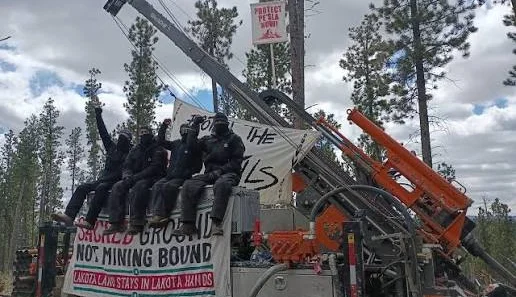
Land defenders held ceremony on active drill pads and blocked access to equipment. Tribal governments, Indigenous organizations and environmental groups went to federal court. On May 4, a federal judge issued a temporary restraining order stopping the drilling for 14 days while the lawsuits continued.
Four days later, Pete Lien & Sons withdrew the entire plan of operations and told the Forest Service it did not intend to submit another plan for the project.
One week of concentrated resistance.
In Indian Country, where fights over land can outlive the people who started them, that is almost absurdly fast.
Pe’ Sla was not protected by one thing. There was ceremony. There were lawsuits. There were people sitting on drill pads. There were tribal governments, environmental groups and Indigenous organizers working at the same time.
And then there was no drilling project.
That does not make graphite unnecessary.
Quite the opposite.
Natural graphite is essential to lithium-ion batteries, energy storage, steelmaking and other industrial uses. The United States remains 100 percent net import reliant for natural graphite, according to the U.S. Geological Survey. That dependence has made domestic graphite a matter of energy policy, industrial policy and national security.
Which brings us about 2,700 miles northwest.
To Alaska.
Graphite One Inc. is proposing the much larger Graphite Creek Project on the Seward Peninsula, about 37 miles north of Nome and 28 miles southeast of Teller and Brevig Mission. Its Alaska subsidiary, Graphite One (Alaska) Inc. is developing the proposed year-round open-pit mine and processing operation.
Alaska’s Department of Natural Resources describes Graphite Creek as the highest-grade and largest known large-flake graphite deposit in the United States.
This one did not disappear in a week.
But it has slowed down.
In July, the U.S. Army Corps of Engineers determined that Graphite Creek is likely to result in reasonably foreseeable significant effects and required a full Environmental Impact Statement instead of continuing with the less extensive Environmental Assessment process.
At nearly the same time, Alaska’s State Historic Preservation Office agreed with four federal eligibility determinations for identified cultural resources but did not agree with 14 others, asking for additional analysis and consultation. Federal permitting is now expected to extend into 2027.
Graphite One says it supports the more extensive environmental review and still expects to begin production in 2029. The company argues that Graphite Creek can provide jobs, economic development and a domestic supply of a mineral the United States currently imports entirely from abroad.
Some Alaska Native corporations agree.
Bering Straits Native Corporation, the regional Alaska Native corporation for the area, invested $2 million in Graphite One in 2023 after its board unanimously supported development of Graphite Creek. Doyon, Limited and Aleut later invested another $5 million combined.
BSNC says its investment gives the region a seat at the table in a project whose mine site is not on BSNC or village-corporation land, while creating potential employment and other benefits for shareholders.
Some of the Native people living closest to the proposed mine see it differently.
In November 2025, the Native Village of Brevig Mission, the City of Brevig Mission and Brevig Mission Native Corporation jointly opposed the project, citing threats to subsistence resources, cultural integrity, community well-being and long-term regional sustainability.
At a July 2026 meeting in Brevig Mission, about 80 residents gathered with Graphite One and BSNC representatives. Opposition was overwhelming. Residents spoke about water, fish, caribou, berries, marine mammals and the Imuruk Basin on which the community depends.
Darla Tocktoo, tribal office coordinator for the Native Village of Brevig Mission, put it plainly: “We are stopping you for our survival.”
Teller residents have expressed a more divided response, including interest in jobs alongside fear of losing subsistence grounds used by Teller, Mary’s Igloo and Brevig Mission for generations.
That disagreement deserves more attention than the easy story of Native people versus a mining company.
Because in Alaska, some of the investors are Native too.
And that takes us back to 1971.
Alaska Native people had fought for recognition of aboriginal land claims for decades. Then oil was discovered at Prudhoe Bay in 1968, and resolving those claims became urgent to the state, the federal government and the oil industry as well. Unresolved Native title and the federal land freeze stood in the path of North Slope development and a trans-Alaska pipeline.
Congress passed the Alaska Native Claims Settlement Act in 1971.
ANCSA extinguished aboriginal title in exchange for roughly 44 million acres and $962.5 million, creating a system of regional and village corporations owned by Alaska Native shareholders. The pipeline had not yet been built. ANCSA helped clear a central legal obstacle; Congress separately authorized the trans-Alaska pipeline in 1973, and construction followed.
Fifty-five years later, one of the strange children of that compromise is standing beside a graphite deposit.
ANCSA corporations are Alaska Native institutions, but they are not tribal governments. They are for-profit corporations accountable to shareholders, even as many also fund cultural, educational and social programs. Tribal governments carry a different kind of responsibility to their citizens and communities.
Sometimes those interests align.
Sometimes they do not.
Graphite One does not prove that Alaska Native corporations have betrayed their shareholders. Nor does opposition from Brevig Mission prove that the mine will inevitably damage the region. The environmental review now underway exists precisely because many of those questions remain unresolved.
But the disagreement reveals something worth looking at.
America needed oil.
Suddenly, settling Native land claims became urgent.
Now America needs graphite.
And once again, an important mineral deposit sits beside Indigenous communities being asked how much risk they should carry for something the rest of the country says it needs.
Pe’ Sla offers one answer.
People said no.
They occupied the ground, went to court and stopped the drills.
Alaska has not answered yet.
Maybe the clean-energy transition really will be different from the extractive economy that came before it.
But changing what we dig out of the earth is the easy part.
Changing how we decide whose earth gets dug up may be harder.
The mineral changed.
The question did not.
PRINCIPAL SOURCE
PE’ SLA / BLACK HILLS
- Associated Press — “Black Hills drilling project canceled after backlash from tribes” (May 8, 2026)
Independent report on Pete Lien & Sons withdrawing the Rochford drilling plan after tribal and community opposition. - South Dakota Searchlight — “Opponents win temporary order against drilling project near culturally significant Black Hills site” (May 5, 2026)
Federal temporary restraining order; two lawsuits; nine tribal plaintiffs and nonprofit plaintiffs. - South Dakota Searchlight — “Company withdraws from controversial Black Hills exploratory drilling project” (May 8, 2026)
Withdrawal details and status of the drilling project. - NDN Collective — Lawsuit against U.S. Forest Service over Pe’ Sla drilling approval (April 2, 2026)
Plaintiff statement describing the February 27 Forest Service approval, categorical exclusion challenge, cultural and religious claims, and Pe’ Sla context. - NDN Collective — Direct action at Pe’ Sla drill pads (April 30, 2026)
Primary-source account of land defenders holding ceremony at active drill pads and the direct-action phase of the campaign. - ICT — “Mining company pulls out of controversial Pe’ Sla drilling project” (May 8, 2026)
Indigenous news report on the withdrawal and the 18 planned drill sites near Pe’ Sla.
GRAPHITE CREEK / SEWARD PENINSULA
- Alaska Department of Natural Resources — Graphite One / Graphite Creek Project
State project description, location, proposed mine type, claim area, and deposit characterization. - Federal Permitting Dashboard — Graphite Creek Project
Current federal permitting schedule, lead agency and project description. - Federal Permitting Dashboard — Section 404 milestone extension (July 28, 2026)
Army Corps determination that reasonably foreseeable significant effects require preparation of an Environmental Impact Statement. - Federal Permitting Dashboard — Section 106 review milestone extension (July 28, 2026)
Alaska SHPO concurrence with four cultural-resource eligibility determinations and nonconcurrence with 14 others, requiring more analysis and consultation. - KNOM — “Brevig Mission residents oppose Graphite One mine at community meeting” (July 30, 2026)
Local reporting on the July 28 meeting, Brevig Mission tri-entity opposition, subsistence concerns, BSNC’s position and Darla Tocktoo’s quote. - The Nome Nugget — “Teller residents voice concern over proposed graphite mine” (June 10, 2026)
Local reporting on Teller residents weighing potential jobs against threats to subsistence grounds. - KNOM — “Graphite One pledges local benefits as residents warn of subsistence risks” (June 4, 2026)
Local reporting on project scale, access plans, community concerns, federal permitting and Brevig Mission’s consultation objections. - Bering Straits Native Corporation — Graphite One
BSNC’s explanation of its $2 million investment, unanimous board support, shareholder-employment rationale and ‘seat at the table’ position. - Graphite One Inc. — BSNC strategic investment announcement (Sept. 5, 2023)
Company primary source on BSNC’s investment and the Graphite Creek development partnership. - PR Newswire / Graphite One — Doyon and Aleut strategic investment (Oct. 6, 2025)
Company announcement documenting the additional $5 million combined investment by Doyon, Limited and Aleut. - Graphite One Inc. — EIS pathway statement (July 9, 2026)
Company position on the EIS decision and its stated 2029 production target.
GRAPHITE / U.S. SUPPLY
- U.S. Geological Survey — Mineral Commodity Summaries 2026
Federal mineral data used for U.S. natural-graphite import reliance and national supply context. - U.S. Geological Survey — Graphite Statistics and Information
USGS commodity page with current and historical natural-graphite summaries.
ANCSA / PIPELINE HISTORY
- Alaska Governor — 50th Anniversary of the Alaska Native Claims Settlement Act (Dec. 18, 2021)
State historical summary: Prudhoe Bay increased urgency, ANCSA created Native corporations, transferred 44 million acres, and facilitated pipeline construction. - U.S. Department of the Interior — ANCSA overview
Federal overview of ANCSA’s purpose and historical significance. - National Park Service — Alaska Subsistence / ANCSA history
Federal historical summary explicitly connecting Prudhoe Bay oil, unresolved Native land claims, the pipeline and ANCSA. - Alaska Legislature — “Clears way for Trans-Alaska Pipeline”
State legislative history describing pipeline plans as an impetus to settle Native claims and ANCSA as helping clear the way for TAPS. - U.S. Code, 43 U.S.C. §1601 — ANCSA congressional findings
Current statutory text declaring an immediate need for a fair and just settlement of Alaska Native aboriginal claims.