
On one of the rare trips when there were some kids on board, one of the boys was incredibly keen to know everything there was to know about the different land mammals that survived in the arctic. You couldn’t help but feel a little bit sorry for the kids on these sailings, since they usually did not have any other kids they could play with. It took a certain kind of youth to make the best out of it. It took a kid that really respected their own grandparents and to realize the wonder of being on a ship with over 100 grandparents aboard.
This kid was about 12 years old and came to every presentation, asked a million questions, but, luckily, they were intelligent questions, so you didn’t mind answering them.
While polar bears and musk oxen and wolves and foxes were all very fascinating to him, he was even more fascinated by the smaller creatures that lived year-round in the arctic. It made total sense to him that small birds would high-tail it out of there when the summer was over, and he understood that little mammals, especially on islands, weren’t able to migrate. Still, he couldn’t quite wrap his head around how such small creatures could survive such harsh winters, no matter how thick their fur was.
It was delightful to speak of all the different survival techniques each of the little mammals had, like voles building tunnels through the snow each winter to connect all of their food caches, the thick snow actually giving them insulation, even going so far as to line the tunnels with dried grass, which gave even better insulation.
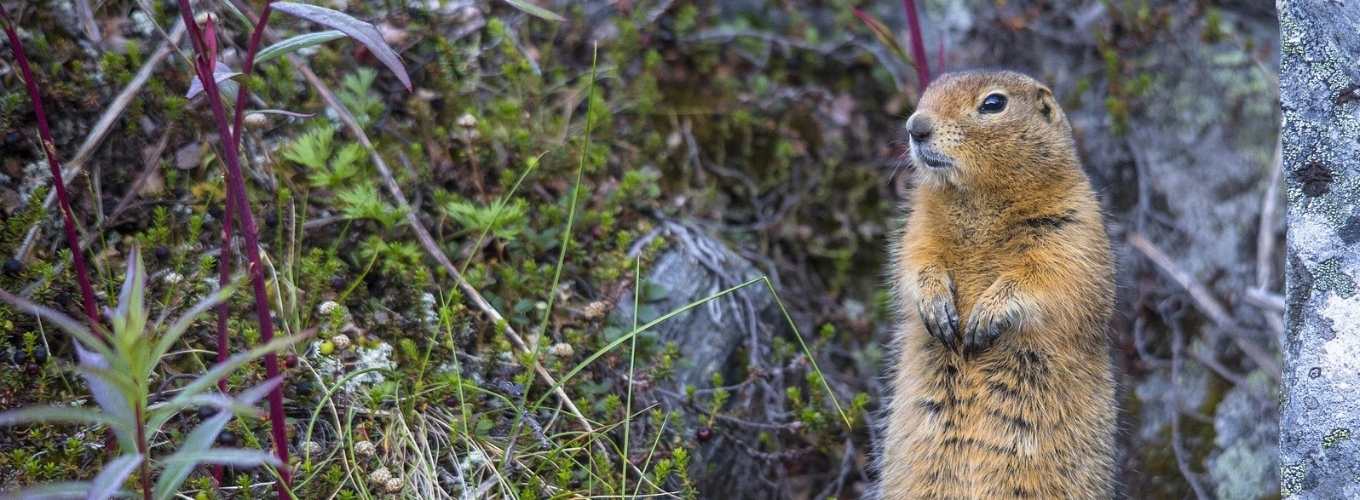
Then there were the Arctic Ground Squirrels that burrowed under the ground and went into deep hibernation each winter. And when we say deep hibernation, we mean a DEEP hibernation, as in their body temperature drops to just barely above freezing, their heart beats slow to just one beat per hour, and for all practical purposes they are little squirrel popsicles for eight months out of the year. This truly fascinated him.
Now, while scientists and most people know them as Arctic Ground Squirrels, Native people know them as Parka Squirrels, a label which I tended to use quite a bit.
One day, while on shore somewhere, he came up to me and earnestly asked why, while everyone else called them Arctic Ground Squirrels, I kept calling them Parka Squirrels. I bent over a little and stated plainly, “Well, it takes about 35 to make one.”
It didn’t happen right away. In fact, he left me with a puzzled look on his face. When he reached his parents, you could tell they were going to let him figure it out on his own, nodding at me and smiling from afar. It didn’t take long, but eventually, miles from civilization, on a far-off beach, on a warm sunny day, the light bulb of a curious 12-year-old was lighting up, “Oh, man. That’s rough.”