
One of the realities of spending a great deal of time in nature is that one does glimpse, on a regular basis, how cruel nature can seem. Granted, cruel is the word we might use, but that is anthropomorphizing this issue quite a bit. Nature is simply nature, and everything in nature is doing exactly what nature has always done, fought for survival. And the cold, hard truth is: Not everything survives. And there is very, very likely pain for the ones that do not survive. And, frankly, there is not a single thing we can do to ease the pain of every creature capable of feeling pain that experiences said pain during its life. To be naïve about such a basic truth shows an ignorance to our own effect on the world around us. Anyone who eats meat is participating in the pain and death of another feeling being on this planet. To say nothing of the pain created by wars. We might try to stand back and say we have personally nothing to do with those wars, but when we dig deep down, we must admit to our culpability. I don’t want to get into politics or anything, but merely acknowledging that pain exists and no creature on this earth is immune from it. It may seem cruel, but, really, it is just life being life.
One day, we were steaming eastbound, from Prince William Sound to the Inside Passage, across the Gulf of Alaska, which usually takes about 36 hours. It was a calm, sunny day, perfect for being lazy. To this day, I cannot recall why it is that we happened to stop in the middle of it all, but somehow, someone had spotted something interesting floating in the water and we had plenty of time, so Captain decided to stop. Upon closer inspection, and actually dragging it out of the water, we discovered it was an old tire. What was quite fascinating, however, was the amount of life that had decided to call that floating old tire home, from long, alien-looking gooseneck barnacles, to the various fish we saw swimming around it, to even a small salmon shark we saw circling about, which was likely feeding on some of those fish.
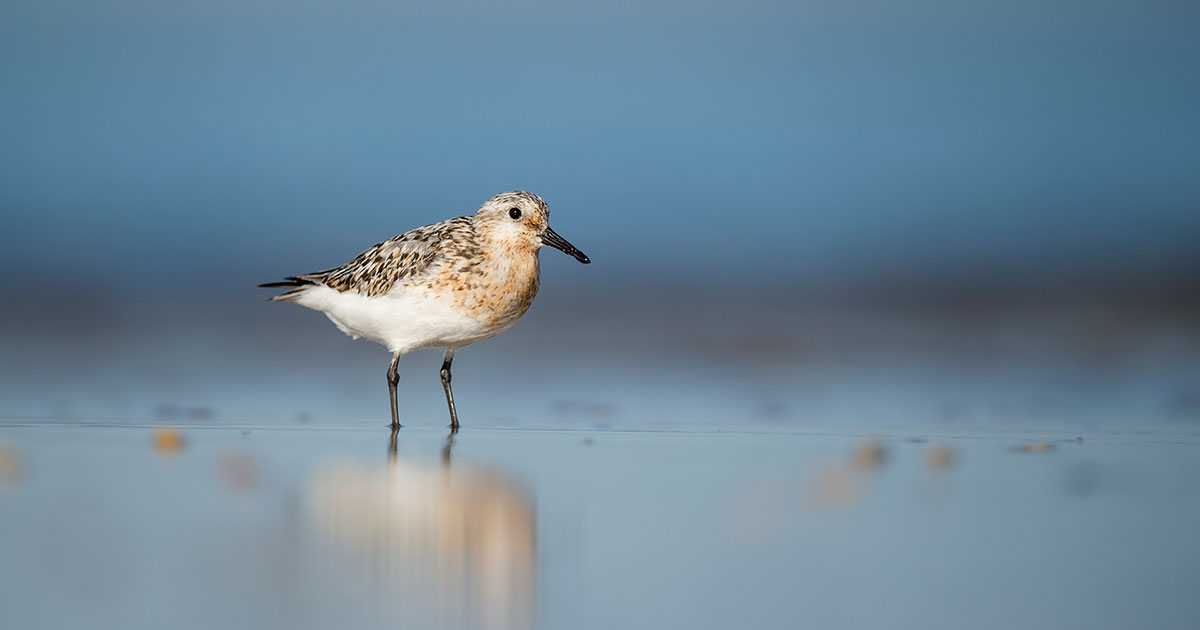
But there was another lifeform associated with that old tire on that particular day: A sandpiper.
Sandpipers, as their name suggests, are shorebirds, running pell-mell just above the surf line grabbing up any small creature unlucky enough to have poked its head, or whatever part of its body indeed actually pokes out, from the sand. Being rather delicate creatures, they migrate, like many other animals, according to the season. During the summer, the shores all around Alaska are teeming with life, providing the ultimate smorgasbord for a huge variety of migrating fauna, from the tiniest songbirds right up to the great baleen whales. Then, when the season changes, all of those creatures migrate back to their wintering grounds, be it in warmer climes, or, like the arctic tern, clear down to the Antarctic for the southern summer. Depending on how delicate the creature is, the migration can be that much more or less perilous.
Sandpipers, being rather delicate, have what one could categorize as a perilous migration. When flying either north or south, many sandpipers will make one singular dash right across the ocean, leaving the shores of the Gulf of Alaska, their final stopover from northern shores, right down to Vancouver Island, from where they can follow the coast, which is safer, further south, or vice versa.
Obviously, the most perilous part of this journey is the bit over the open ocean. Any number of things can go wrong, from bad luck when it comes to weather, to a bird simply not having found enough food during the summer to complete the trek. This means the journey is particularly difficult for the chicks of the year. After they hatch in late spring, they have only a few short months to master the skills of eating and flying in order to pack on enough fat to make the thousand-mile flight over water at the end of summer. It should be quite clear that not every chick is going to make it. In fact, at least a third of chicks are lost during this first migration.
We could sit around feeling sad about this and wondering what we could do to help those poor chicks not die along the way. But, it is actually something to celebrate. You see, this is Darwin’s survival of the fittest at work. If we figured out a way to save all of the chicks each year, we, in the long run, would be dooming the sandpiper to extinction. It is precisely the fact that so many chicks die that keeps the greater population safe, because only the genetically strongest of the birds will survive, thus, being able to procreate resulting in even stronger generations along the way. Then some new challenge will rise up and the sandpipers will adapt and only the strongest will survive that change. And so on and so forth for all of the time life will exist on this planet.
So, imagine our surprise of finding a little sandpiper standing on the old tire bobbing in the North Pacific. Of course, the goal is to find to largest and most stable thing to stand on. When the Spirit of Oceanus floated by, the sandpiper thought we were a much better platform. One of the guests ended up finding it on the Bistro Deck, hiding in a corner. Word travelled quickly and soon we were being asked what we were going to do about this poor, tired sandpiper. Despite knowing better ourselves, we decided it would be a wonderful teaching opportunity to get the guests interested in sandpipers and be able to talk about them more, as we always looked for interesting things to talk about on the long open ocean crossings.
The little guy was obviously exhausted, notably because it was so easy to go and pick it up. A healthy bird would have given a gusty peep and ran or flown off. This one was easy to place into a shoebox. It gave no fight, no peep at all. We had saved it in the nick of time.
Back in Jen’s cabin, we put some crumpled up paper towel in the box for snugglies and a little dish of water. We noticed after a bit that it wasn’t drinking any of the water. I got a little bottle cap, put some water into it, and held it right up to the bird’s beak. To our surprise, it dipped its little beak in and drank. It would be difficult not to admit the thrill of having a wild creature respond to my intervention, no matter how insignificant. I was feeling quite proud, even though it would have likely drunken water from anyone who had presented the cap to it.
After a few hours of quiet and darkness in the snug shoebox (holes put in for air, of course), the little guy started peeping, a sure sign it was feeling better. Word travelled quickly, again, and everyone wondered if we were going to release the bird so that it could complete its migration. So, we let it be known we would have a release ceremony in 30 minutes from the Bistro Deck, which was large enough for everyone to fit.
At least half of the guests showed up. I admit I have always been puzzled by how certain things end up just not being interesting to certain people. To me, it wasn’t every day that something like this would happen and the chance to be a part of it would be a great little story to tell of a big Alaska adventure. But, suffice to say, not everyone showed up.
We spoke of migration routes and fat supplies, wished the little guy luck and opened the shoe box. I’m sure any wild animal put in a similar situation would be a little stunned by this and it took the little sandpiper a few seconds to grasp what was going on before it jumped out of the box and flew off. Everyone clapped, congratulated each other for having intervened in the cruelty of nature and save a poor little sandpiper so that it could complete its journey and one day have cute little sandpiper chicks of its own who will not make a similar mistake and need to get rescued. But thank goodness we were there and aren’t we such nice people? And soon enough, the piper gone, the guests dispersed. We stayed on deck, answering questions the stragglers had, and then, just enjoying a little moment of peace, and, truth be told, feeling a little smug ourselves for having saved the little bird.
“What’s that?” one of us chirped and pointed.
Out on the shimmering swells, we could see a mat of kelp, and standing on a long blade of that pliable kelp was a little sandpiper, likely the one we had just released not ten minutes before. We put our binoculars onto it and noticed the pliable kelp was not a stable enough platform to carry even this tiny bit of weight. The kelp was giving way and the sandpiper was slowly sinking into the water. Once its feathers got wet, it was toast. No chance for survival.
Slowly, as it sank, it shrank on the horizon as we steamed on. There was absolutely nothing we could do.
We looked at each other and Jen said, matter of fact, “None of the guests need to know about this. As far as they are concerned, the story has a happy ending.”
We each nodded in agreement, and Darwin prevailed.